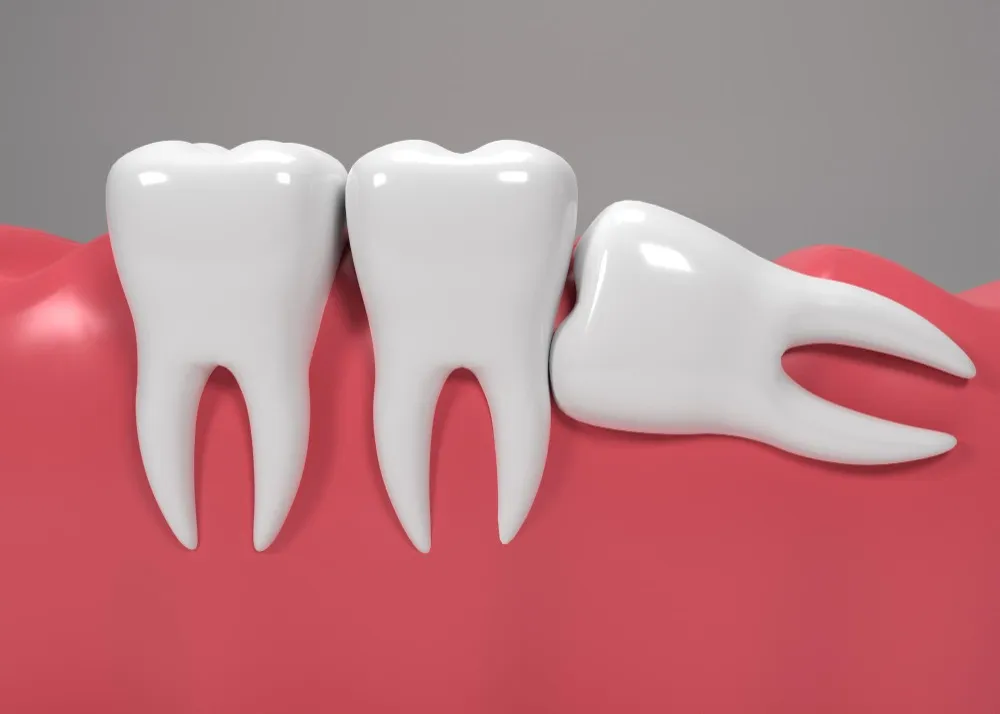
Wisdom teeth are the last permanent teeth to develop, usually appearing between the ages of 17 and 25. While some people never experience problems, others develop pain, swelling, infections, or crowding that require professional evaluation.
Understanding when wisdom teeth removal becomes necessary can help prevent complications and reduce the risk of emergency dental treatment.
What Are Wisdom Teeth?
Wisdom teeth, also called third molars, are located at the very back of the mouth.
Most adults have four wisdom teeth, although some may develop fewer or none at all.
Because modern jaws are often smaller than those of our ancestors, there may not be enough space for these teeth to erupt normally.
Common Problems Caused by Wisdom Teeth
Not every wisdom tooth requires removal.
However, treatment may be recommended if they cause:
- Pain
- Repeated gum infections
- Swelling
- Tooth decay
- Damage to neighboring teeth
- Food trapping
- Cyst formation
- Difficulty cleaning the area
Regular monitoring helps determine whether intervention is necessary.
What Does 'Impacted' Mean?
An impacted wisdom tooth is one that cannot fully erupt because it is blocked by bone, gum tissue, or adjacent teeth.
Impacted teeth may remain:
- Completely buried
- Partially erupted
- Angled toward neighboring teeth
- Positioned horizontally
Digital imaging helps dentists evaluate the position accurately.
Signs You Should Schedule an Evaluation
Professional assessment is recommended if you notice:
- Persistent pain near the back of the mouth
- Swollen gums
- Difficulty opening the mouth
- Bad breath despite brushing
- Jaw stiffness
- Recurrent infections around partially erupted teeth
These symptoms should not be ignored, as untreated infections may spread.
What Happens During Wisdom Tooth Removal?
The procedure depends on the tooth's position.
Simple extractions may be completed quickly under local anesthesia, while impacted teeth often require minor oral surgery.
Typical steps include:
- Clinical examination.
- Digital X-rays.
- Local anesthesia.
- Tooth removal.
- Cleaning the area.
- Post-operative care instructions.
Modern surgical techniques focus on minimizing discomfort and supporting faster healing.
Recovery Tips
Healing usually progresses smoothly when patients follow professional advice.
Helpful recommendations include:
- Rest during the first 24 hours.
- Eat soft foods.
- Avoid smoking.
- Keep the extraction area clean.
- Take medications as prescribed.
- Attend follow-up appointments if advised.
Most swelling improves within a few days.
Is Preventive Removal Always Necessary?
Not necessarily.
Healthy wisdom teeth that erupt properly, remain easy to clean, and do not damage neighboring teeth may simply require periodic observation.
Regular dental examinations allow dentists to monitor changes over time and recommend treatment only when appropriate.
For residents of Sarjapur Road and nearby areas of Bangalore, routine dental check-ups often include monitoring wisdom teeth before they become painful. Achala Dental Clinic uses diagnostic imaging to assess eruption patterns and recommend treatment based on individual findings rather than removing wisdom teeth unnecessarily.
Wisdom teeth removal is not a routine procedure for everyone. Careful evaluation, timely diagnosis, and appropriate treatment planning help ensure the best outcome while preserving overall oral health.
Keywords