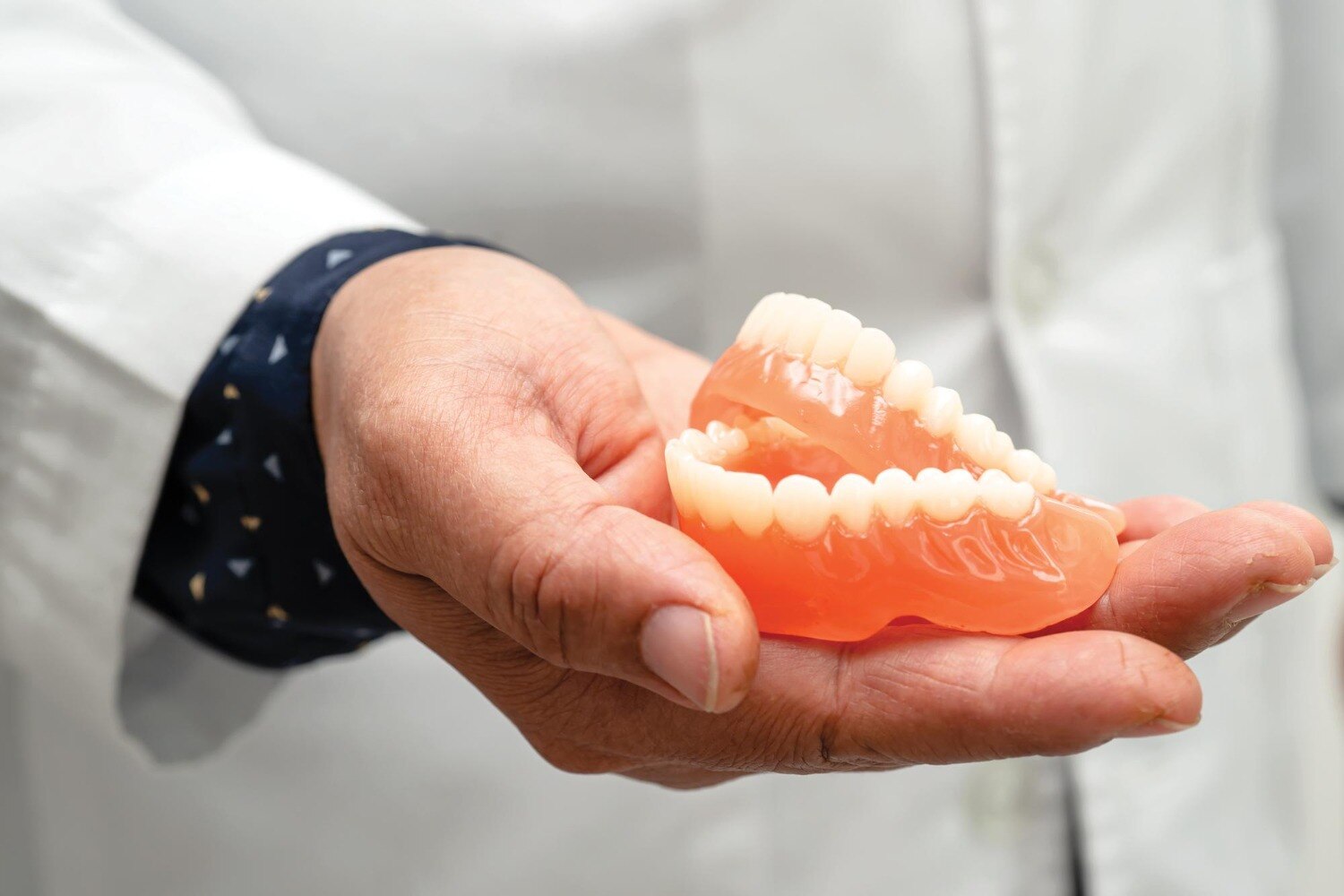
Missing teeth change how food is broken down and how the tongue shapes familiar sounds. By understanding the adjustment process, recognising an unhealthy fit, and comparing dentures with fixed alternatives, you can make daily use safer and more comfortable.
Key takeaways
- Chew slowly with both sides of your mouth while adapting to dentures.
- Read aloud daily to retrain your tongue and improve new speech sounds.
- Seek an adjustment for persistent sore spots, slipping, or difficulty chewing.
- Compare bridges or implants when denture stability, comfort, or upkeep remains poor.
How Dentures Restore Chewing Without Matching Natural Teeth
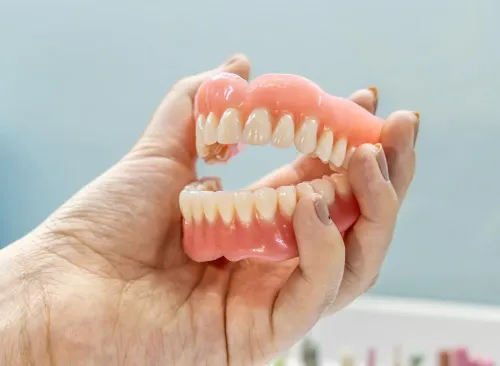
Artificial teeth restore chewing by meeting the opposing teeth in a planned bite. Their cusps and grooves cut and crush food as you close and move your jaw, while the denture base spreads pressure over the gums and supporting ridge.
This makes denture chewing practical again, but it does not recreate the grip of natural roots.
Natural teeth have a periodontal ligament that senses pressure and helps you control bite force. A denture rests on soft tissue, so its base can shift when you bite, particularly when the lower ridge is narrow or resorbed.
Saliva adds lubrication and helps the denture adhere; dry mouth can make it feel less secure and make swallowing food harder. Implants anchor a crown or overdenture to bone, giving greater stability and stronger sensory control.
Build chewing skill instead of testing the denture with a tough meal immediately:
- Begin with soft food cut into small pieces.
- Chew on both sides at the same time to reduce tipping.
- Add firmer textures gradually as your jaw and tongue learn the new contact.
- Take smaller bites when food pulls the denture loose or collects beneath its base.
A denture can restore everyday eating, but rocking, repeated gum soreness, clicking, or slipping during chewing signals a fit problem, not a challenge to overcome by biting harder. An adjustment can improve contact between the artificial teeth and opposing teeth.
Why Speech Changes at First and How to Retrain Your Tongue
S, F, V, and TH sounds change because your tongue, lips, and jaw must work around new tooth positions and the denture’s palatal surface. S sounds are especially sensitive: a small change in the air channel between your tongue and teeth can create a lisp or whistle.
This early denture speech improves as your tongue learns the new contours.
- Read a newspaper or book aloud for 5 to 10 minutes, concentrating on clear, unhurried words.
- Practise S sounds with “see,” “sixty-six,” and “sunshine,” keeping the tongue close to the front teeth without touching them.
- Alternate “fan–van” and “fine–vine” to train F sounds and V sounds″. For F, let the lower lip touch the upper front teeth lightly; for V, add voice and vibration.
- Repeat “think,” “this,” and “thirty,” placing the tongue tip gently between or just behind the front teeth for TH sounds.
- Record yourself reading, then repeat any unclear sentence while slowing your pace.
| Sound | Tongue or lip target | Useful practice |
|---|---|---|
| S | Narrow air channel behind the front teeth | “see,” “six,” “sun” |
| F | Lower lip against upper front teeth | “fan,” “coffee” |
| V | Same contact with vocal vibration | “van,” “seven” |
| TH | Tongue tip between or behind front teeth | “thin,” “this” |
Repeated conversation helps more than silent rehearsal. Persistent clicking, slurring, slipping during speech, or difficulty being understood calls for a denture adjustment rather than simply tolerating the problem.
A Practical First-Weeks Routine for Comfort and Safer Use
For the first days, practise denture insertion and removal over a folded towel or basin of water so a dropped denture is less likely to break. Rinse it, check that it is seated correctly, and do not force it into place; ask your clinician to demonstrate the correct path.
- Start with soft foods cut into small pieces, such as cooked vegetables, eggs, yoghurt, and tender fish.
- Practise chewing on both sides at once to keep the denture balanced instead of pushing food only to one side.
- Add firmer foods gradually. Leave tough meat, sticky sweets, hard nuts, and crusty bread until controlled chewing feels comfortable.
- Read aloud and speak in short conversations. Repeating difficult words helps your tongue learn the new contours.
- Remove the denture overnight, clean it outside your mouth with a denture brush, and store it in water or the recommended soaking solution. Avoid hot water and abrasive household cleaners.
Use adhesive only as directed. A large amount cannot correct a loose base, and repeated slipping needs denture adjustment. Immediate dentures also commonly need review or relining as extraction sites heal.
| Sign or symptom | What it may indicate | What to do |
|---|---|---|
| Persistent sore, bleeding area, or sharp rubbing | Pressure from the denture base | Arrange a clinical review |
| Clicking, rocking, or slipping during speech or chewing | Poor fit or unstable contact | Stop tolerating it; request an adjustment |
| Lower denture that will not stay seated | Insufficient support or fit problem | Book an assessment, especially if eating is difficult |
Signs the Denture Needs Adjustment, Relining, or Better Daily Care
Minor tenderness, extra saliva, and altered speech can reflect normal adaptation when they improve with practice and do not prevent eating or speaking. A poor-fitting denture causes a persistent pattern: pain in the same spot, movement during chewing, or slipping while you talk.
| Sign | What it suggests | What to do |
|---|---|---|
| Improving tenderness | Normal tissue adaptation | Remove it at night, clean it, and monitor the area |
| Repeated gum sores | Pressure from a poor-fitting denture | Book an examination for an adjustment; do not file the denture yourself |
| Rocking denture or clicking dentures | Loss of stability or an incorrect bite | Ask whether adjustment, relining, or replacement is needed |
| Food trapped beneath the base | Gaps from changing tissues or inadequate cleaning | Rinse after meals and arrange a fit review |
| Persistent slipping | Insufficient retention | Use adhesive only as directed while awaiting assessment |
Immediate dentures commonly need adjustment or relining as extraction sites heal and the gums and bone change. A large amount of adhesive, repeated slipping, or pain means adhesive is masking a fit problem rather than fixing it.
- Keep partial dentures clean, and brush and floss your remaining teeth, especially around clasped or abutment teeth.
- Clean complete dentures, your tongue, and oral tissues daily; remove the denture overnight unless your dentist gives different instructions.
- Contact a dentist promptly if a sore worsens, bleeding develops, or clicking, slurring, or movement persists. Never reshape the fitting surface at home.
When to Compare Dentures With Bridges or Dental Implants
A fixed option is not automatically the better option. Compare removable dentures versus bridges and dental implants against your remaining teeth, bone, cleaning routine, budget, and willingness to undergo surgery.
| Option | Stability and preparation | Surgery, cleaning, and maintenance | Changing gums or bone |
|---|---|---|---|
| Removable denture | Rests on gums; a lower denture can rock, especially over a severely resorbed ridge. No implant surgery; a partial denture uses rests and clasps on remaining teeth. | Remove it for brushing and gum cleaning. Expect adjustments, relining, or replacement as tissues change. | Gum shrinkage and bone resorption alter the fit, so looseness can develop. |
| Fixed bridge | More stable during chewing than a denture, but it needs suitable neighbouring teeth. Those teeth are reshaped to support crowns. | No implant surgery. Clean under the bridge with floss threaders or interdental brushes; supporting teeth need careful reviews. | A bridge does not follow ridge shrinkage where a tooth is missing, leaving a changing gap beneath it. |
| Dental implant | Anchored in bone and usually offers greater stability than a conventional denture. Placement requires surgery and enough bone or additional grafting. | Brush and clean around implants every day; attend maintenance reviews. | Implants do not prevent all bone change, and peri-implant inflammation can threaten support. |
For poor lower denture stability, a removable implant overdenture retained by two implants can improve comfort while remaining removable. Suitability depends on bone availability, medical status, hygiene, cost, and maintenance attendance. Achala Dental Clinic can help compare those factors before you commit.
Frequently asked questions
How do removable dentures restore chewing comfort?
Artificial teeth meet opposing teeth in a planned bite, while cusps and grooves cut and crush food. The denture base spreads pressure across the gums and supporting ridge.
Why does speech change after getting dentures?
The tongue must adapt to the denture’s shape and position. Reading aloud and practising difficult sounds helps retrain tongue movement during the first weeks.
What routine helps during the first weeks with dentures?
Start with softer foods, take small bites, chew on both sides, speak aloud daily, and clean the denture and mouth as directed. Remove the denture for its recommended rest period.
When does a denture need adjustment or relining?
Arrange an assessment for persistent sore spots, looseness, rocking, clicking, gagging, broken parts, or difficulty chewing and speaking. Relining may help when the supporting ridge has changed shape.
When should you compare dentures with bridges or dental implants?
Compare options when you want greater stability, dislike removing a denture, have suitable supporting teeth or bone, or need to weigh treatment time, maintenance, surgery, and cost.