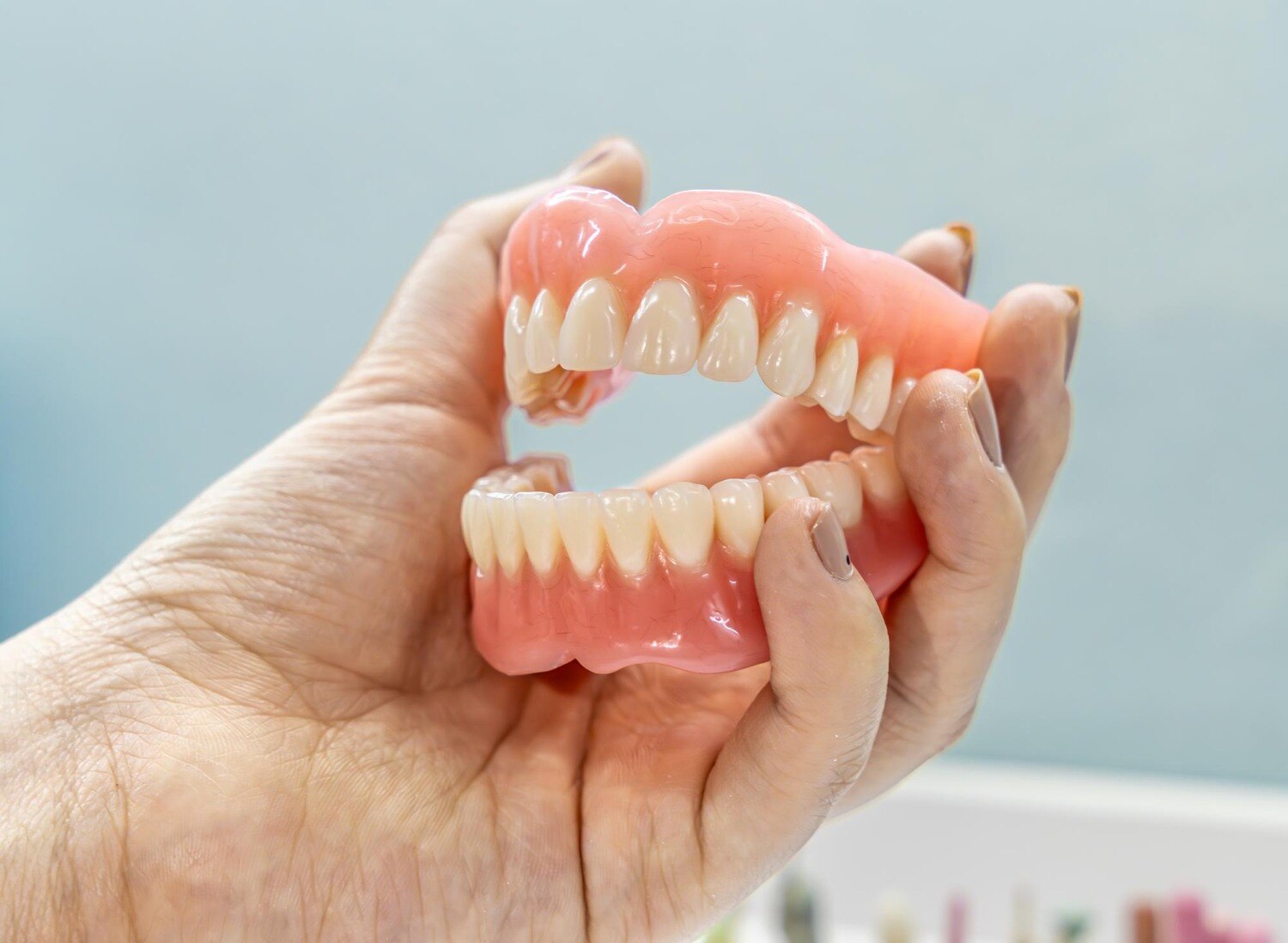
A complete denture can replace an entire upper arch, lower arch, or both, but its fit depends on healing, jaw shape, accurate records, and regular adjustments. By the end, you will know how treatment works, which denture option matches your priorities, and what daily care and follow-up involve.
Key takeaways
- A complete denture replaces every tooth in one arch, not the jawbone.
- Bring your medical history and discuss extraction timing before choosing immediate dentures.
- Compare conventional dentures with implant-supported options for stability, maintenance, and cost.
- Remove dentures at night, clean them daily, and attend fit reviews.
What a Complete Denture Replaces—and What It Cannot Do
A complete denture is a removable prosthesis: an acrylic base carrying artificial teeth that replaces all natural teeth and lost gum-area tissues in one arch. An upper denture replaces the entire upper arch; a lower denture replaces the entire lower arch. Wearing both replaces missing teeth in both jaws.
This differs from a partial denture, which replaces some missing teeth while using remaining teeth or other structures for support.
Expect a complete denture to:
- Restore a broad chewing surface, but not the same biting force or sensation as natural teeth.
- Improve lip and cheek support and help you form certain sounds.
- Feel less secure than natural teeth, especially while eating sticky or hard foods.
- Require practice while speaking and chewing.
Lower dentures are often less stable than upper dentures because they have less supporting area and must work around tongue movement. Ridge shape, saliva, muscle control, and the accuracy of the fit also affect retention.
| Immediate denture | Inserted on the day teeth are removed; healing changes the gums and ridge, so adjustment, relining, or replacement is common. |
|---|---|
| Conventional denture | Made after extraction sites heal; it usually starts with a more settled foundation. |
A denture is not a permanent biological replacement. Remove it at night unless your clinician gives another instruction, and arrange oral examinations even when it feels comfortable. Your gums, ridges, tongue, palate, and any remaining teeth still need assessment.
The Records and Appointments That Create a Usable Denture
The denture treatment sequence starts with an examination of your mouth, supporting tissues, jaw ridges, and any teeth that remain. The clinician also checks for inflammation, ulcers, infection, or pressure areas; an ill-fitting denture can cause chronic trauma and impaired chewing.
- Plan extractions when teeth cannot be retained, and allow healing when a conventional denture is intended.
- Record the shape of the supporting tissues with denture impressions or digital scans.
- Take jaw-relation records to measure how the upper and lower jaws meet.
- Set artificial teeth in wax for a try-in, allowing changes to tooth position, speech, appearance, and lip support.
- Fit the finished denture and check retention, bite, borders, and comfort.
- Attend review appointments for pressure-point adjustments and later maintenance.
Denture impressions capture the surfaces that support and control the appliance. A distorted impression can produce a loose base, poor stability, or a border that digs into tissue. Digital scans can record these surfaces without impression material, but the clinician still needs an accurate scan of the usable supporting area.
Jaw-relation records determine how the teeth contact during chewing and speaking. An inaccurate record can make the denture rock, strain the muscles, alter speech, or leave you unable to chew evenly.
Sore spots after fitting are common and require adjustment; do not grind the denture yourself. An irreversible change can worsen the fit, so return for a clinical correction instead.
Immediate or Conventional: How Extraction Timing Changes the Fit
An immediate denture is inserted on the day of tooth extraction; a conventional denture is made after the extraction sites and gum healing have settled. The choice determines whether you have teeth during healing, not whether the appliance will need later care.
| Option | Immediate denture | Conventional denture |
|---|---|---|
| Timing | Inserted immediately after planned extractions | Made after extraction sites have healed |
| Early fit | Designed before the final ridge shape is known | Designed against healed gums and supporting tissues |
| Later care | Adjustment, relining, or replacement is commonly needed | Adjustments are still possible as the ridge changes |
After tooth extraction, swelling falls and bone and soft tissue remodel. That changes the ridge shape, so an immediate denture that fitted on day one can become loose, rub, affect speech, or reduce chewing efficiency. A reline adds material to its fitting surface; replacement may be needed after healing changes the ridge substantially.
A conventional denture avoids fitting over fresh sockets, but it is not permanently stable. Gum healing and ongoing ridge resorption can loosen it months or years later, even without visible damage. Do not grind a sore area yourself: an irreversible alteration can worsen the fit. Have the denture examined and adjusted professionally.
Choosing Between Conventional Dentures and Implant-Supported Options
A conventional complete denture is suitable when every tooth in one arch is missing or cannot be predictably saved, and you accept a removable appliance. It is made after extraction sites heal, but denture retention still depends on ridge shape, saliva, muscle control, and fit.
Lower dentures need particular caution because their smaller support area and tongue movement make them less stable.
| Option | What it means | When to discuss it |
|---|---|---|
| Conventional complete dentures | Removable teeth replacing an entire upper or lower arch | No useful natural teeth remain, healing is complete, and a removable solution is acceptable |
| Preserved teeth with a partial denture | Remaining teeth support a removable appliance instead of being removed | A tooth has a sound root, manageable decay or gum disease, and a reasonable long-term prognosis |
| Implant-retained overdentures | A removable denture clips onto implants for added stability | A loose lower denture affects eating or speech, and bone, soft tissues, health, surgery, and maintenance are suitable |
| Fixed implant-supported bridges | A non-removable bridge is attached to several implants | You want a fixed option, can clean under the bridge, and have adequate implant support |
Ask Achala Dental Clinic for a tooth-by-tooth prognosis before consenting to extraction; removing a restorable tooth closes the option of using it for support. A badly fitting denture should not be rescued with large amounts of adhesive: persistent looseness or pain calls for examination, relining, or a different plan.
These options also require ongoing reviews, because bone changes, wear, hygiene, and component damage alter performance.
The First Weeks, Daily Cleaning, and Long-Term Reviews
Expect extra saliva, altered speech, cheek or tongue biting, and difficulty chewing during the first days. Practise speaking aloud and begin with soft foods cut into small pieces. Chew on both sides, increase textures gradually, and do not judge the final fit before your mouth has adapted.
A painful ulcer or sharp sore spot needs a denture adjustment appointment. Do not grind, file, or bend the denture yourself; one irreversible change can worsen its fit. Remove it if instructed, record where it hurts, and return promptly. Denture adhesive can improve stability, but it cannot correct a damaged or poorly fitting base.
Use this routine for safe denture cleaning:
- Rinse the denture after meals to remove food.
- Brush it daily with a denture brush or soft toothbrush and a non-abrasive denture cleanser. Ordinary toothpaste can scratch acrylic.
- Handle it over a folded towel or a sink filled with water, because a fall can fracture it.
- Follow the soaking product’s instructions, and never use hot water, which can distort the denture.
- Remove it at night unless your dentist gives a specific reason to wear it.
Continuous wear and poor hygiene increase the risk of denture stomatitis. Ask for an examination if you notice red or burning tissue, persistent soreness, or cracks at the mouth corners.
Keep review appointments even when it feels comfortable. Changes in the ridges, chronic rubbing, rocking, broken teeth, speech changes, or declining chewing efficiency signal a need for adjustment, relining, or replacement. Examine your gums, palate, tongue, and any remaining teeth at these visits.
Frequently asked questions
What does a complete denture replace?
It replaces all missing teeth and lost gum-area tissues in one upper or lower arch. It does not replace the jawbone or natural tooth roots.
What records and appointments are needed for complete dentures?
The process uses examinations, impressions or digital scans, bite records, tooth-shape and shade selection, trial fitting, and final delivery, followed by adjustment appointments.
Should you choose immediate or conventional dentures after extraction?
Immediate dentures are inserted on the extraction day but require adjustments as the gums heal. Conventional dentures are made after healing, which usually allows a more stable final fit.
How do you care for complete dentures?
Remove them at night, brush them with a soft denture brush and mild soap, rinse after meals, soak them in denture cleanser as directed, and attend reviews when comfort or fit changes.