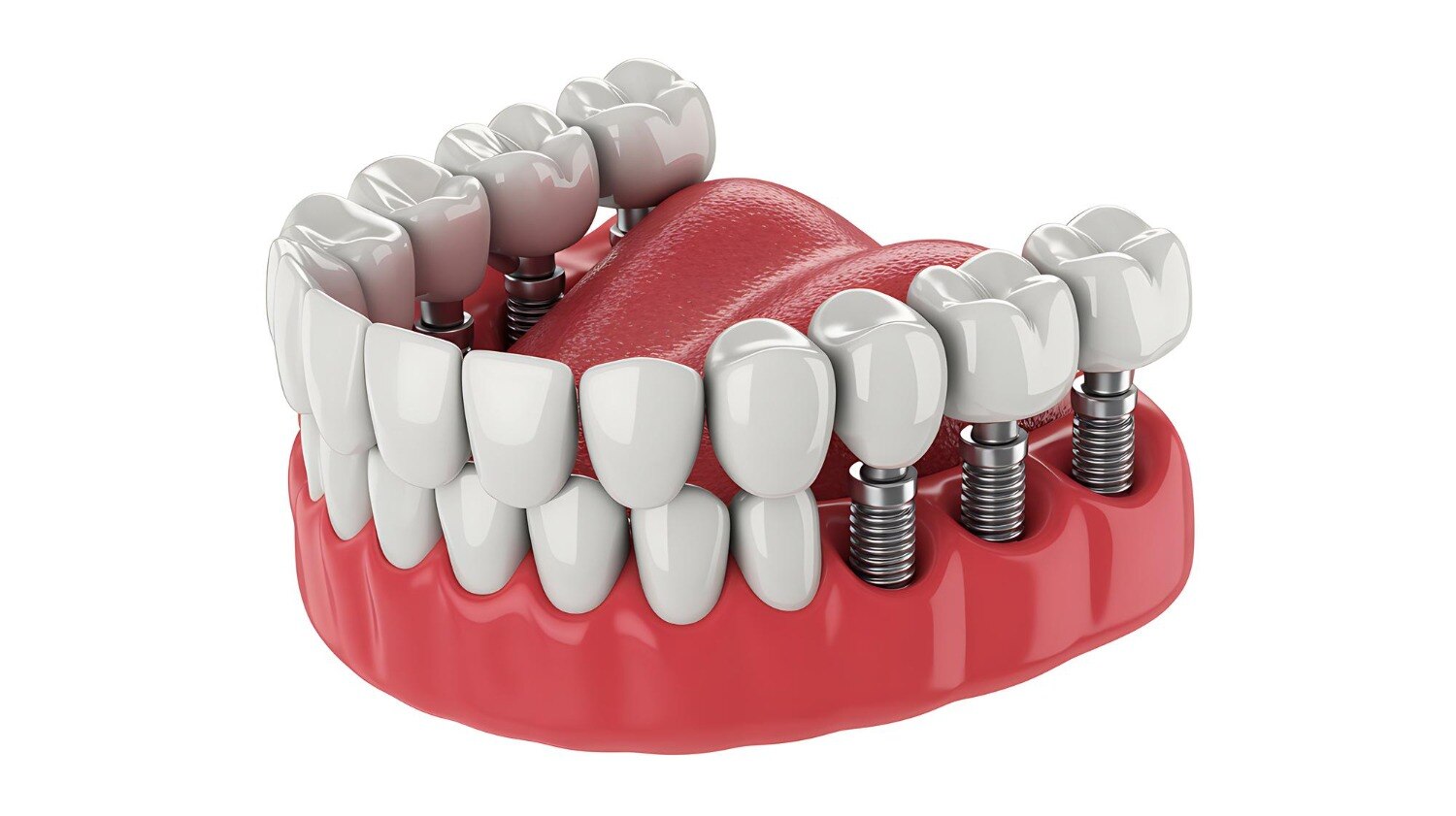
The right choice depends on more than the number of missing teeth: your gum health, bone, bite, medical history, habits, and ability to complete treatment all affect suitability. By the end, you will know which implant restoration may fit your situation, what the assessment involves, and what the treatment demands before you decide whether to seek a consultation.
Key takeaways
- Consider an implant when neighbouring teeth are healthy and you want to preserve them.
- Treat active gum disease, decay, and infections before implant placement.
- Expect checks of bone volume, gum health, bite, and medical risks.
- Plan for surgery, healing, a custom restoration, and lifelong maintenance.
When the pattern of tooth loss makes an implant worth discussing
A single missing tooth is worth discussing for an implant when the neighbouring teeth are healthy and you want to avoid cutting them down for a conventional bridge. An implant replaces the root, while an implant-supported crown replaces the visible tooth; surgery, adequate bone and a longer treatment sequence are the trade-offs.
| Pattern of tooth loss | Restoration commonly considered | Why an implant may fit |
|---|---|---|
| Single missing tooth | Implant-supported crown | Replaces one tooth without relying on, or reducing, adjacent teeth |
| Several adjacent teeth | Implant-supported fixed bridge | One bridge can replace the span, so one implant per tooth is not always necessary |
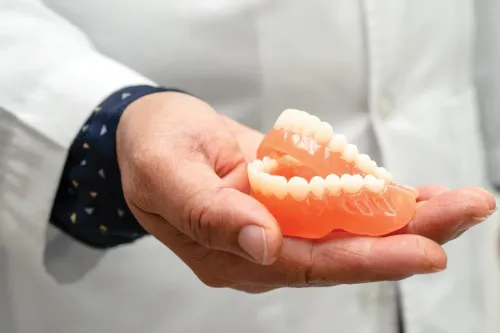
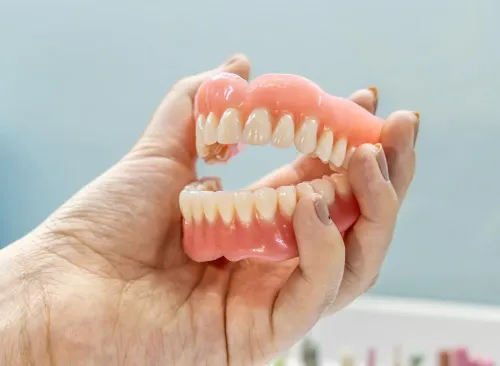
| All teeth missing | Implant-retained or implant-supported denture, or a fixed full-arch restoration | Implants can improve denture stability or support a complete arch when natural teeth cannot be saved |
For several missing teeth, implant positions depend on the gap’s length, available bone, bite forces, appearance and planned prosthesis. For all teeth missing, the discussion depends on whether you need a removable denture or a fixed restoration and whether enough bone exists to support the plan.
An implant is worth pursuing only after the mouth is suitable for it. Untreated decay, active gum disease, poor plaque control, heavy smoking, uncontrolled diabetes or an unstable bite can raise the risk of inflammation and supporting-bone loss. You also need to manage surgery, healing and multiple appointments.
Conditions that need treatment before implant placement
Active infection and poor control need treatment before implant placement. Uncontrolled gum disease, untreated decay, and poor oral hygiene allow bacteria to damage the tissues around a new implant, increasing the risk of peri-implant inflammation and progressive bone loss.
| Factor | What needs attention | Why it matters |
|---|---|---|
| Uncontrolled gum disease | Complete periodontal treatment and stabilise the gums | Existing inflammation raises the risk of implant complications |
| Untreated decay | Repair decayed teeth and control infection | Infection can spread and compromise the treatment plan |
| Poor oral hygiene | Demonstrate reliable brushing, interdental cleaning, and professional maintenance | Plaque accumulates around implants as readily as it does around natural teeth |
| Heavy smoking | Stop or reduce smoking with a personalised risk discussion | Tobacco impairs healing and increases the chance of failure |
| Uncontrolled diabetes | Improve blood-glucose control with medical guidance | Hyperglycaemia can delay healing and increase surgical complications |
| Unstable bite | Manage grinding, excessive forces, or an uneven bite | Overloading can damage the implant or its restoration |
| Inadequate bone | Consider bone grafting or sinus-floor augmentation | These procedures add surgery, healing time, cost, and possible complications |
| Limited availability | Confirm you can attend surgery, reviews, restoration visits, and maintenance | Implant care is a staged process, not a single appointment |
A graft can improve bone height or width, but it does not remove the need to control infection, plaque, loading forces, smoking, or systemic disease. If those risks remain unmanaged, delaying treatment or choosing a bridge or denture may be safer.
How your dentist checks bone, gums, bite, and medical risk
The assessment starts with an examination of your gums, remaining teeth, bite, and jaw joints. Your dentist looks for bleeding, periodontal pockets, infection, decay, tooth movement, plaque buildup, and bite forces that could overload an implant or its restoration.
The clinical checks usually include:
- Gum condition and signs of active periodontal disease
- Stability and health of the teeth beside the gap
- Bite contacts, grinding, clenching, and available space
- Soft-tissue thickness and the shape of the residual ridge
Dental X-rays show tooth roots, nearby structures, and broad areas of bone. When two-dimensional images do not provide enough detail, a CBCT scan creates cross-sectional views of ridge width, ridge height, the sinus, and nerves.
The scan should answer a planning question; it is not a substitute for examination, and its radiation exposure must be justified.
Your medical-history review covers diabetes control, medicines, smoking, immune conditions, previous radiation, and healing problems. Poorly controlled diabetes can increase surgical and healing complications, so your dentist may coordinate care with your physician rather than treating diabetes as an automatic exclusion.
Bone quantity determines whether the implant has enough width and height for stable placement. Bone quality affects initial stability and healing. A narrow or shortened ridge may require bone grafting; reduced upper-jaw height beneath the sinus may lead to sinus lift treatment.
These procedures add surgery, healing time, cost, and possible complications, and they do not replace infection control or good plaque management.
Choosing the restoration and understanding the treatment sequence
A single implant crown replaces one missing tooth without cutting down healthy neighbouring teeth. An implant-supported bridge can replace several adjacent teeth using fewer implants than teeth, while an implant-retained denture or implant-supported denture replaces many teeth or a complete arch.
| Option | What it means | Main trade-off |
|---|---|---|
| Single implant crown | One implant supports one separate crown | Preserves adjacent teeth but requires surgery and a longer healing period |
| Implant-supported bridge | Two or more implants support a bridge replacing several teeth | Avoids one implant per tooth but depends on bone, bite forces and span length |
| Implant-retained denture | Implants anchor a removable denture through clips or attachments | More stable than a conventional denture, but you remove it for cleaning |
| Implant-supported denture | Implants carry more chewing load for a fixed or removable full-arch prosthesis | Offers strong support but needs careful cleaning and maintenance |
The treatment sequence usually follows these stages:
- Remove a damaged tooth if needed. Tooth removal may be combined with implant placement, or the socket may need weeks or months of healing; grafting adds further time.
- Place the implant into the planned bone position, then allow osseointegration—the bone-to-implant connection—to develop over several months before substantial loading.
- Attach a healing component, scan or impress the site, and fit the crown, bridge or denture after the gum and implant are ready.
Immediate loading is reserved for selected cases with strong primary stability, suitable bone and controlled bite forces. It is not a universal shortcut.
The appointments, recovery, and maintenance an implant requires
Plan for several appointments over months, not a single procedure. You will attend planning and imaging visits, implant placement, reviews during healing, and a later appointment to fit and adjust the crown, bridge, or denture.
| Stage | What happens | Time and effort |
|---|---|---|
| Planning | Your dentist confirms the design, hygiene standard, medical clearance, and bite; CBCT imaging may guide placement. | One or more visits |
| Surgery and recovery | The implant is placed, and you follow instructions on brushing, food, swelling, and prescribed medicines. | Healing can take several months before regular loading |
| Restoration | The temporary teeth, if needed, protect appearance and function while tissues settle; the final restoration is fitted and checked. | Additional impressions, fitting, and adjustment visits |
| Follow-up | Your dentist checks gum health, bite, implant stability, and the restoration. | Regular reviews, with timing based on risk |
Clean around the implant every day using a soft toothbrush, interdental brushes, or floss designed for the restoration. Do not use force that cuts the gum. Smoking, plaque buildup, and missed reviews raise the risk of peri-implantitis, which can cause bleeding and progressive bone loss.
Long-term implant maintenance includes professional cleaning, bite adjustments, replacement of worn screws or prosthetic parts, and maintenance X-rays when clinical findings or baseline comparison justify them. At Achala Dental Clinic, ask for the recall interval and written cleaning instructions before consenting. The required time and ongoing care are part of the treatment decision.
Frequently asked questions
When is a dental implant worth discussing for one missing tooth?
Discuss an implant when neighbouring teeth are healthy and you want to avoid cutting them down for a conventional bridge. An implant replaces the root, while an implant-supported crown replaces the visible tooth.
What conditions need treatment before implant placement?
Active gum disease, untreated decay, infection, and other oral-health problems need attention before implant surgery. Your dentist must also assess whether your medical conditions or medicines affect healing.
How does a dentist assess suitability for an implant?
Your dentist checks bone volume, gum health, the bite, neighbouring teeth, and medical risk. Dental imaging helps plan implant position and identify whether bone support is adequate.
What does the dental implant treatment sequence involve?
Treatment involves planning, implant placement, a healing period, and attachment of a restoration such as a crown, bridge, or denture. Follow-up visits check healing, fit, bite, and hygiene.