Cavities can begin soon after the first tooth appears, while changes in eruption, spacing and bite can develop before a child feels discomfort. You will learn when to arrange visits, how to protect teeth at home, which warning signs need prompt care and what a pediatric examination can reveal about growing teeth.
Key takeaways
- Start dental visits by the first birthday or when the first tooth appears.
- Brush twice daily with fluoride toothpaste matched to your child’s age.
- Treat cavities in baby teeth instead of waiting for them to fall out.
- Seek care for tooth pain, swelling, fever, or difficulty eating.
Why Baby Teeth Need Care Before They Fall Out
Permanent teeth do not make primary teeth disposable. A cavity can begin soon after a baby tooth erupts, and waiting for it to fall out can leave a child in pain for months or allow infection to develop.
- Healthy primary teeth support chewing, speech and nutrition. Painful teeth can make a child avoid food, sleep poorly and lose comfort during ordinary activities.
- Primary teeth hold space and guide the permanent teeth beneath them. Losing a primary molar too early can let neighbouring teeth drift, reducing room for its successor and contributing to crowding.
- Treating decay protects daily life and school attendance. An infected tooth may require urgent treatment or extraction rather than simple prevention.
- Early care gives a dentist time to apply fluoride varnish and show you how to clean newly erupted surfaces. Ask before using fluoride supplements; the decision depends on age, total fluoride exposure and the fluoride level in your drinking water.
A dentist does not automatically replace every early-lost tooth with a space maintainer. The choice depends on the child’s age, the tooth lost, the permanent successor’s development, available space and bite; an appliance also needs follow-up because it can loosen, trap plaque or interfere with eruption.
When to Start Visits and What Tooth Eruption Usually Looks Like
Schedule the first dental visit when the first tooth appears, and no later than 12 months. This establishes a dental home by 12 months, before decay or pain develops. The clinician checks caries risk, fluoride exposure, feeding and cleaning habits, and whether eruption is progressing normally.
| Stage | Usual timing | What parents may see |
|---|---|---|
| Primary incisors | 6–16 months | Lower teeth usually appear before upper teeth |
| Primary first molars | 13–19 months | Broad chewing teeth erupt behind the incisors |
| Primary canines | 16–23 months | Pointed teeth fill the spaces between incisors and molars |
| Primary second molars | 23–33 months | The back of the primary set becomes complete |
| Permanent first molars and incisors | 6–8 years | New molars appear behind baby teeth; front teeth loosen and are replaced |
| Permanent canines and premolars | 9–12 years | Mixed dentition changes the bite as baby teeth continue to shed |
| Permanent second molars | 11–13 years | Another set of back teeth erupts behind the first molars |
This tooth-eruption sequence is a guide, not a deadline. Mildly uneven timing, temporary gaps, and overlapping teeth are common, but a missing tooth, swelling, or an eruption path that looks blocked deserves an earlier examination. Do not wait for pain: decay between teeth or early chalky white or brown lesions can be hidden from view.
The Daily Cavity-Prevention Routine That Actually Matters
Brush twice daily with fluoride toothpaste, especially before bed. Start as soon as the first tooth erupts; plaque and acid can damage a new tooth before a child feels pain.
- Under age 3: use a smear or rice-grain amount of toothpaste.
- Ages 3 through 6: use a pea-sized amount.
- Provide brushing supervision until your child can consistently clean every surface without swallowing toothpaste.
- Use gentle circles along the gumline and brush the chewing grooves of newly erupted back teeth.
- Begin flossing when two teeth touch; a toothbrush cannot clean the contact between them.
- Offer water between meals and limit frequent sipping of juice, sweetened drinks, or milk overnight. Repeated sugar exposure gives plaque bacteria repeated acid attacks.
After brushing at night, give only water. Do not rinse away all the toothpaste with a large mouthful of water; spit out the excess instead.
Ask the dental professional about fluoride varnish when teeth erupt. It helps remineralize early damage and resist further mineral loss, but works best alongside toothpaste and reduced sugar exposure. Do not start fluoride supplements yourself: the correct decision depends on your child’s age, drinking-water fluoride level, total exposure, and decay risk.
What a Pediatric Visit Checks—and When Not to Wait
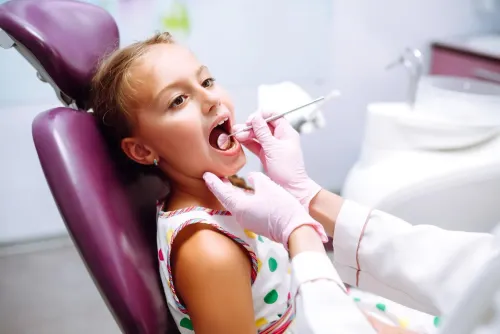
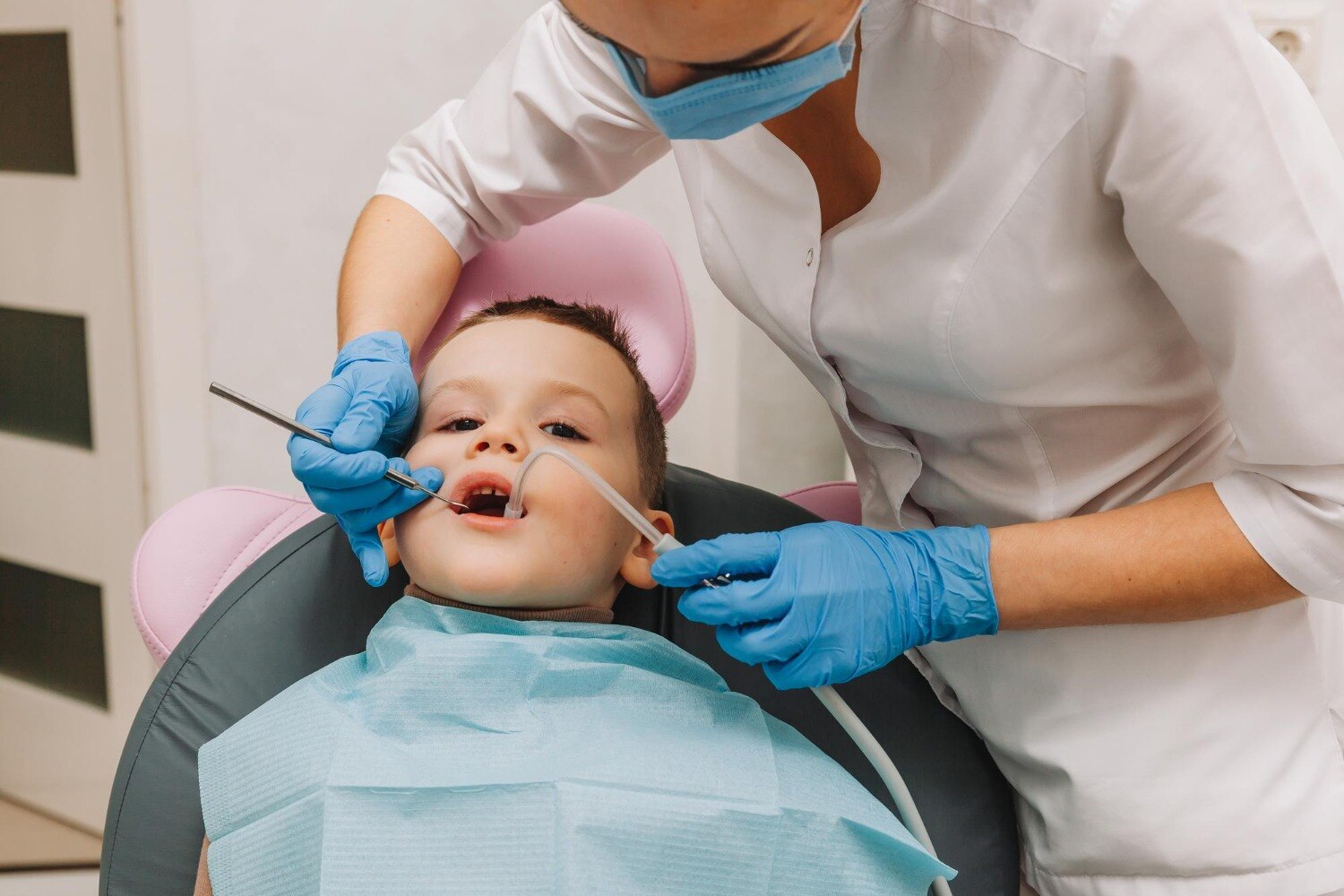
A pediatric assessment checks more than visible cavities. The dentist reviews medical history, diet, brushing, fluoride exposure and oral habits, then examines each tooth for early decay, plaque and gum inflammation, enamel changes, infection, eruption, spacing, bite and jaw growth. Fluoride varnish may be applied to strengthen vulnerable enamel.
Dental radiographs when clinically justified can reveal decay between teeth or problems beneath the gums; they are selected according to findings, risk, previous images and the child’s ability to cooperate, not on a fixed schedule.
| Finding or symptom | What to do | Why it matters |
|---|---|---|
| Chalky white or brown mark, sensitivity, food trapping or persistent bad breath | Arrange an earlier visit | Early decay can worsen before a hole or pain appears |
| Toothache, broken tooth, new swelling or a gum bump | Contact the dentist promptly | Decay, injury or infection needs assessment |
| A baby tooth is lost too early, or a permanent tooth is not appearing as expected | Request an appointment | Space loss or eruption delay can affect developing teeth |
| Facial swelling, fever, difficulty swallowing or breathing, uncontrolled bleeding, or a serious dental injury | Seek urgent medical care | Infection, trauma or airway risk cannot wait |
Do not wait for pain; children can have significant decay without obvious symptoms. After an injury, preserve a knocked-out permanent tooth in milk and seek immediate dental advice; do not reinsert a knocked-out baby tooth.
How Monitoring Growing Teeth Prevents Bigger Problems Later
A dental check can reveal a developing problem before all permanent teeth erupt. The clinician compares both sides of the mouth, checks available space, watches how teeth emerge, and assesses whether the upper and lower jaws meet normally.
Ask the dentist to investigate:
- A permanent tooth that is markedly later than its matching tooth, or an ectopic eruption path that points toward the wrong space.
- Early or delayed tooth loss, a retained baby tooth, or space loss after a primary molar is removed.
- New crowding, a crossbite, or a bite that shifts the jaw to one side when the child closes.
The next step is not always braces or an appliance. A tooth that is developing normally may need observation at a planned interval. If space is narrowing, the clinician may discuss removing an obstruction, guiding eruption, or using a space maintainer.
That choice depends on the child’s age, tooth lost, successor’s development, available space, bite, and time since loss. A space maintainer also needs review because it can loosen, trap plaque, or block eruption.
At Achala Dental Clinic, ask the clinician to show you which tooth or space is being monitored and what change would trigger treatment rather than another review. Record the planned review date.
What Parents Must Do Between Visits—and What Care Cannot Guarantee
Parents remain responsible for daily brushing supervision, even after fluoride varnish or a reassuring examination. Use a smear of fluoride toothpaste twice daily before age 3 and a pea-sized amount from ages 3 to 6. Continue helping until your child can clean every tooth surface reliably.
Control sugar frequency by reserving sweet drinks and snacks for defined occasions instead of allowing repeated sipping or grazing throughout the day. Home habits determine much of the protection between appointments.
For dental anxiety and sensory sensitivities, tell the dental team what triggers distress and request a slower acclimatization visit before treatment. After previous painful treatment, agree on a stop signal and pain-control plan in advance.
Routine pediatric dental care has limits: it cannot replace home care or guarantee that no problem will develop between visits. Contact the dentist when a new concern appears rather than waiting for the next scheduled check.
Frequently asked questions
Why do baby teeth need treatment if they eventually fall out?
Untreated cavities in primary teeth can cause pain, infection, difficulty eating, and problems preserving space for permanent teeth.
When should a child have their first dental visit?
Schedule the first visit by the first birthday or within six months after the first tooth appears.
What daily routine helps prevent cavities in children?
Brush twice daily with fluoride toothpaste, limit frequent sugary snacks and drinks, and help children brush until they can clean all surfaces reliably.
When should parents seek dental care before a routine visit?
Arrange prompt care for tooth pain, swelling, fever, facial injury, a broken tooth, or trouble eating or sleeping.