
A wisdom tooth does not need removal simply because it is impacted or difficult to see. You need to weigh symptoms, infection, damage to nearby teeth, cleaning access, X-ray findings and the reliability of monitoring before choosing observation, gum treatment or surgery.
Key takeaways
- Monitor a symptom-free tooth when examinations, X-rays, and cleaning remain reliable.
- Seek dental care for pain, swelling, bad taste, fever, or difficulty opening your mouth.
- Treat facial swelling, breathing trouble, or swallowing difficulty as an emergency.
- Compare extraction plans by tooth position, nerve proximity, anaesthesia, and recovery risks.
When is removal necessary, and when is monitoring enough?
An impacted wisdom tooth or a symptom-free tooth is not automatically removed. Watchful monitoring is reasonable when it has no disease, can be reviewed with examinations and X-rays, and you can maintain follow-up.
| Option | What it means | When it applies |
|---|---|---|
| Watchful monitoring | Check symptoms, cleaning and X-rays over time | Healthy, stable tooth with reliable follow-up |
| Gum treatment | Clean or irrigate beneath the gum flap and improve home care | Local inflammation or one mild first episode of pericoronitis |
| Extraction of the affected tooth | Remove only the tooth causing disease or a clear future problem | Localised decay, infection, damage or poor cleaning access |
| Removal of all four teeth | Remove upper and lower wisdom teeth together | A documented plan shows disease or strong future risk in several teeth |
Removal becomes more compelling with decay that cannot be predictably restored, periodontal disease or bone loss, an abscess, recurrent pericoronitis, resorption, a cyst or tumour, or damage to the second molar. One mild first episode is not usually an automatic extraction indication; repeated episodes carry more weight.
The pericoronitis treatment decision depends on tooth position, cleaning access, recurrence, existing decay or gum disease, orthodontic plans, age, medical history and whether follow-up can be maintained. Age alone does not decide treatment: younger bone may simplify surgery, but removing a healthy tooth still exposes you to surgical risk without proven benefit.
Which warning signs suggest a wisdom tooth problem?
Swelling behind the second molar, pain when biting, or food trapping around a wisdom tooth suggests a problem that needs examination. A foul taste or pus, cheek swelling, fever, swollen neck glands, worsening pain, or difficulty opening the mouth points more strongly to active infection.
| Tooth situation | Warning sign | What it may indicate |
|---|---|---|
| Partially erupted | Tender gum flap, swelling, trapped food | Pericoronitis beneath the flap |
| Impacted | Pressure, bite pain, or no symptoms | Damage to the second molar or hidden cystic change |
| Fully erupted | Decay, bad taste, or difficult cleaning | A cavity or gum disease around the tooth |
| Infected | Worsening pain, swelling, fever, or pus | Infection spreading beyond the tooth |
Pain location alone cannot identify the responsible tooth. The second molar, another cavity, gum disease, jaw muscles, or another infection can produce pain in the same area.
No pain does not guarantee safety. Gum pockets, recurrent food impaction, decay hidden under the gum, cystic changes, and pressure against the second molar can progress quietly. Arrange a dental assessment if swelling, pus, fever, swollen glands, or restricted opening develops; difficulty breathing or swallowing or rapidly increasing facial or neck swelling needs emergency care.
What happens during a wisdom tooth assessment?
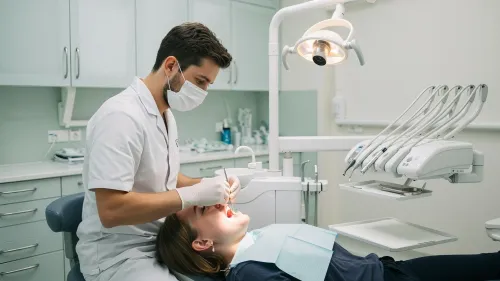
A wisdom tooth dental assessment begins with your medical history, current medicines and allergies. Tell the clinician about previous dental infections, antibiotics, fillings, root-canal treatment or extractions, because these details affect infection risk and treatment choices.
1. The clinician inspects the wisdom tooth, any gum flap covering it and the adjacent second molar. They check for gum pockets, pus, decay, tenderness, food trapping and contact with the opposing tooth, then measure how widely you can open your mouth.
2. Dental X-rays are needed before recommending removal because the visible crown does not reveal the roots, bone coverage or hidden disease. A panoramic radiograph shows the tooth angle, available eruption space, root shape, bone coverage, damage to the second molar and cystic change.
3. Targeted intraoral X-rays provide a closer view of a suspicious crown, contact area or root. For a lower wisdom tooth, the clinician assesses the roots against the inferior alveolar nerve; for an upper tooth, they assess the roots against the maxillary sinus.
Three-dimensional CBCT is reserved for a specific surgical-planning question that two-dimensional images cannot answer, such as uncertain nerve or sinus involvement. It is not a routine scan for every wisdom tooth, because extra imaging should change the surgical plan rather than simply add detail.
When is a wisdom tooth problem an emergency?
A mild, localised first episode without fever or spreading swelling usually needs a prompt routine dental review, not an emergency department visit. Treat a wisdom tooth emergency differently: seek same-day dental or medical attention for:
- difficulty breathing or swallowing
- rapidly spreading facial swelling or neck swelling
- dehydration, such as being unable to drink enough because of pain or swelling
- inability to open the mouth normally
- increasing gum or cheek swelling
- pus or a persistent bad taste
- fever, feeling unwell, worsening pain, or swollen neck glands
These signs point to active infection, so do not wait for a standard extraction appointment. A first mild episode of inflammation under a gum flap is not automatically a reason for extraction, but repeated episodes deserve a stronger treatment discussion.
Antibiotics do not remove a trapped gum flap, a decayed tooth, or the recurring source of infection. A clinician may irrigate the area, drain an abscess, restore the tooth, or extract it; antibiotics are added when infection has spread or systemic signs are present.
Achala Dental Clinic can assess whether a Sarjapur Road patient needs urgent local treatment, imaging, or referral instead of treating every painful wisdom tooth as an immediate four-tooth extraction.
How should you compare extraction options and recovery risks?
Removing one wisdom tooth or all four is not the same operation or recovery. Extract only teeth with disease or a clear future problem unless the examination and treatment plan justify a broader approach.
| Option | What it means | Main trade-off |
|---|---|---|
| Monitor | Keep a symptom-free tooth and review it | Avoids surgery, but requires reliable follow-up and cleaning |
| Single extraction | Remove the affected tooth | Limits surgical trauma to the tooth causing disease or risk |
| All four extraction | Remove upper and lower wisdom teeth together | One recovery period, but more wounds, discomfort and surgical risk |
When a lower root lies close to the inferior alveolar nerve, ask whether coronectomy is appropriate. This removes the crown and leaves the roots to reduce the chance of an inferior alveolar nerve injury. It is unsuitable when roots are diseased, mobile or infected; retained roots can migrate or require later treatment.
Root anatomy and nerve proximity guide consent, including the risks of numbness, tingling or altered sensation in the lip, chin or tongue.
Pain, swelling, bruising and restricted mouth opening are common after surgery. Dry socket after extraction causes deepening pain a few days later, often with an unpleasant taste or odour, rather than soreness that steadily improves. Smoking raises the risk of poor healing and dry socket, so avoid it during recovery.
Seek review if symptoms worsen instead of settling.
Frequently asked questions
When is wisdom tooth removal necessary?
Removal is necessary when the tooth causes decay, gum infection, an abscess, damage to a neighbouring tooth, cystic change, or repeated symptoms. Monitoring is reasonable when the tooth is disease-free, cleanable, and reviewed with examinations and X-rays.
What warning signs suggest a wisdom tooth problem?
Watch for pain at the back of the jaw, swollen or bleeding gums, a bad taste, pus, difficulty opening your mouth, food trapping, or pain affecting a nearby tooth. Fever or spreading swelling needs prompt dental assessment.
What happens during a wisdom tooth assessment?
A dentist checks your symptoms, gum condition, tooth eruption, decay, bite, and mouth opening. They may take a panoramic X-ray to assess the tooth’s angle, roots, bone, and proximity to the inferior alveolar nerve.
When is a wisdom tooth problem an emergency?
Seek emergency care for swelling that affects breathing or swallowing, rapidly spreading facial or neck swelling, severe illness with fever, or inability to open your mouth. Do not wait for a routine appointment.
How should you compare wisdom tooth extraction options and recovery risks?
Ask whether the tooth needs a simple extraction or surgical removal, which anaesthesia is planned, how close the roots are to nerves, and what risks apply. Discuss pain control, swelling, dry socket, infection, bleeding, and expected time away from normal activities.