A missing tooth affects more than appearance: it removes the root that helped transmit chewing forces and support the surrounding bone. You will learn how an implant is built and placed, how dentists assess your suitability, how treatment changes for one tooth or an entire arch, and which maintenance factors protect function over time.
Key takeaways
- An implant replaces the root; an abutment connects it to the crown.
- Bone volume, gum health and general health affect implant suitability.
- Healing time separates implant placement from the final restoration.
- Brush, clean between teeth and attend reviews to protect implant function.
How the Three Implant Parts Recreate a Tooth
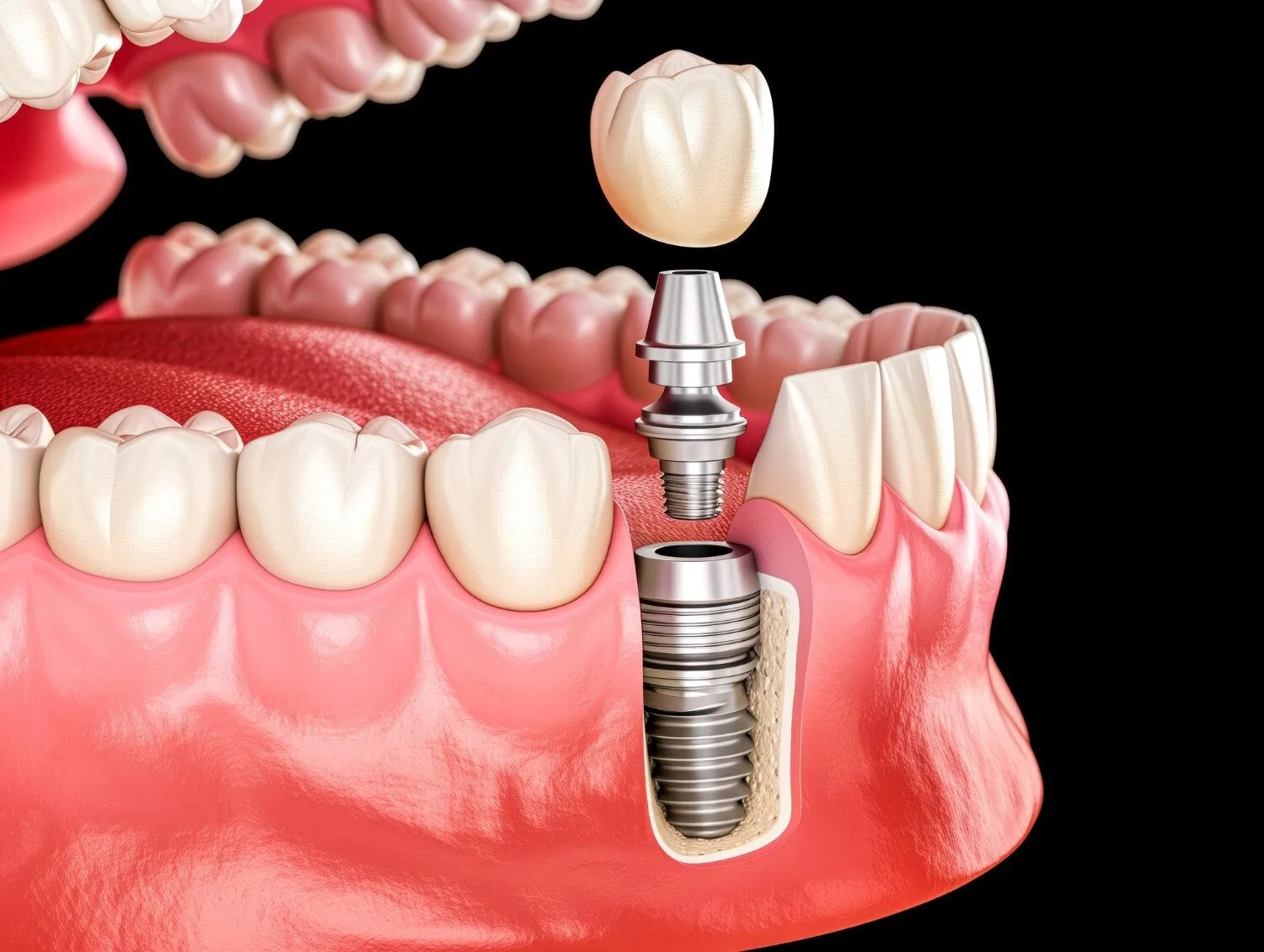
A dental implant replaces the missing root by anchoring inside the jawbone, rather than resting on neighbouring teeth. The visible replacement tooth then attaches above this foundation through a separate connector.
- Titanium implant fixture: This screw-shaped part sits in the jawbone and replaces the root. A zirconia implant offers a metal-free fixture option in selected cases.
- Implant abutment: This connector joins the buried fixture to the replacement tooth and provides the shape and height needed for a stable restoration.
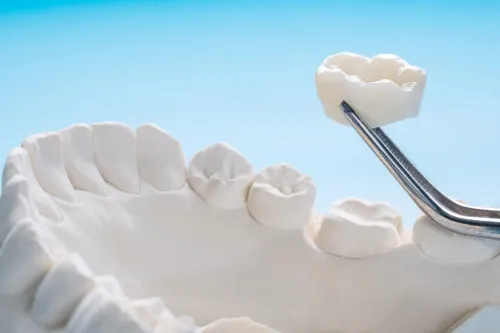
- Crown: This custom-made tooth sits above the gum and restores the visible shape, contact with adjacent teeth and biting surface.
After placement, healing and osseointegration allow living bone to form direct structural contact with the fixture surface. Unlike a natural tooth, an implant has no periodontal ligament, so it lacks the same suspension, shock absorption and pressure feedback.
You may therefore notice excessive chewing forces less readily, while the implant transfers those forces directly into the surrounding bone.
That transfer provides stability during eating and supports jawbone preservation by keeping the bone mechanically loaded. It does not prevent all bone loss: the facial bone can still remodel after extraction, even with immediate implant placement.
Accurate three-dimensional positioning, a cleansable crown contour and regular maintenance protect both function and the tissues around the dental implant components.
How Dentists Decide Whether an Implant Is Suitable
Implant placement is appropriate when the site has stable gum health, sufficient bone, manageable bite forces, and a medical condition that permits healing.
A medical history and oral examination identifies uncontrolled diabetes, smoking, immune problems, medicines affecting bone, active infection, and difficulty maintaining daily hygiene. Diabetes is not an automatic exclusion, but poor glycaemic control raises healing and complication risks.
A periodontal assessment must show controlled gum disease before surgery. Previous periodontitis increases the risk of peri-implant disease, so treatment and continuing maintenance visits matter.
Dentists also complete a bite evaluation for implants. Excessive force, grinding, or limited space can overload the restoration, while the absence of a periodontal ligament reduces pressure feedback from the implant.
Imaging determines whether bone and nearby structures permit safe positioning:
| Finding | Imaging or examination | Likely decision |
|---|---|---|
| Adequate height and width | Panoramic dental imaging, clinical measurements | Implant may proceed if other risks are controlled |
| Unclear bone thickness or nerve position | CBCT scan for dental implants | Plan the implant’s three-dimensional position |
| Narrow or short ridge | Clinical examination and CBCT | Consider bone grafting before or during placement |
| Low posterior upper-jaw bone near the sinus | CBCT showing sinus-floor relationship | Consider a sinus lift |
| Infection or uncontrolled periodontal pockets | Periodontal assessment and radiographs | Treat the disease before implant surgery |
In the lower back jaw, the inferior alveolar or mental nerve requires careful mapping because injury can alter sensation. Immediate placement does not prevent facial bone shrinkage, so preserving the gum contour may still require grafting or connective-tissue augmentation.
What Happens From Extraction to the Final Restoration
The implant treatment sequence moves from tooth extraction and implant planning to placement, healing, and restoration; each stage is checked before the next. A digital dental scan maps bone, neighbouring roots, and restorative space, while examination identifies infection or a need for grafting.
- After extraction, the socket may heal before placement, or the implant may be placed immediately when infection, bone support, and primary stability permit.
- Implant surgery and healing allow bone to bond directly to the fixture. This osseointegration timeline depends on bone quality, implant position, grafting, smoking, diabetes control, and oral hygiene.
- A temporary tooth replacement can protect appearance and chewing while the site heals. It must not overload an implant that has not been cleared for function.
- Once stability is confirmed, the abutment is connected, a scan records the healed tissues, and implant crown fitting completes the restoration.
| Route | Timing of the visible tooth | What controls the decision |
|---|---|---|
| Immediate implant loading | Same day or shortly after surgery | Strong primary stability, correct position, controlled bite, and suitable bone |
| Delayed loading | After osseointegration | Soft bone, grafting, movement, infection, or unfavourable bite forces |
| Healed placement | Implant surgery follows socket healing | Bone or gum repair is needed before fixture placement |
The interval differs because an implant must become stable in living bone before it carries chewing force. Immediate implant loading is reserved for cases meeting the treating team’s criteria; a longer wait protects integration when healing conditions are less favourable.
How the Plan Changes for One Tooth, Several Teeth, or a Full Arch
A single missing tooth usually receives a single-tooth implant and crown, provided the site has enough bone, implant restorative space, and a cleansable gum contour. This avoids cutting down adjacent healthy teeth, but it still involves surgery, healing, and long-term maintenance.
| Option | What the tooth pattern changes | Restoration and daily use |
|---|---|---|
| Single tooth | One gap with usable bone and space for a crown | A single-tooth implant supports one crown. It is fixed and functions independently of neighbouring teeth. |
| Several teeth | Gaps are next to each other, or separated by missing teeth, with enough space for planned implants | An implant-supported bridge replaces several crowns on two or more implants. It avoids placing one implant for every missing tooth, but cleaning beneath the joined restoration becomes essential. |
| Entire arch | No natural teeth remain, or the remaining teeth cannot provide a stable foundation | Full-arch dental implants support a fixed, non-removable restoration. The implant positions must distribute chewing forces and leave access for professional and home cleaning. |
| Lower arch without teeth | A completely edentulous lower jaw needs retention but the patient accepts removal | A two-implant mandibular overdenture clips onto implants and lifts out for cleaning. Attachments, denture teeth, and supporting tissues need periodic inspection and adjustment. |
The choice is not simply fixed versus removable implant restoration. A fixed bridge or full arch demands adequate restorative space, accurate implant positioning, and cleaning access; an overdenture trades some stability for easier removal and maintenance.
The number and position of gaps also determine whether bone augmentation, additional implants, or a different design is needed. A large span does not automatically qualify for a bridge, and a fixed option is unsuitable if its contours cannot be kept clean.
How to Protect Function After Implant Treatment
Long-term function depends on healthy gum tissue, controlled loading, and a restoration you can clean every day—not on the fixture alone. A history of periodontitis raises risk of peri-implant mucositis, inflamed tissue around an implant, and peri-implantitis, inflammation with progressive supporting-bone loss.
| Factor | What to check | Why it matters |
|---|---|---|
| Biological | Periodontal infection, smoking, diabetes control, bone and tissue | Poor control can impair healing and increase disease risk |
| Technical | Torque, bite forces, component fit, crown contour | Loose screws, fractures, chipping, overload, and bulky contours cause implant complications |
| Daily care | Implant cleaning, professional probing and radiographs | Early inflammation or bone loss is easier to manage than advanced disease |
Smoking and dental implants need an explicit plan: address cessation or reduction before surgery and throughout maintenance. Diabetes and implant healing also belong in the consultation; ask how glycaemic control and infection status affect timing.
- Who will provide implant follow-up, and at what intervals?
- How will you clean beneath the crown, and can the restoration be removed for professional access?
- Which symptoms require urgent review: bleeding, swelling, pus, pain, mobility, or a loose crown?
- What is the plan for screw loosening, crown wear, or bone loss?
At Achala Dental Clinic, ask to see the proposed emergence profile and implant maintenance schedule before consenting. A beautiful crown that traps plaque is a technical problem disguised as a cosmetic success.
Frequently asked questions
What are the three parts of a dental implant?
The implant is the jawbone anchor, the abutment is the connector, and the crown or bridge is the visible replacement tooth.
How do dentists decide whether an implant is suitable?
They assess bone volume, gum health, bite forces, medical history, oral hygiene and the condition of nearby teeth using an examination and dental imaging.
What happens from extraction to the final implant restoration?
The tooth is removed when necessary, the site heals or receives grafting, the implant is placed, the bone bonds with it, and the final crown, bridge or denture is fitted.
How does treatment differ for one tooth, several teeth or a full arch?
One missing tooth usually receives one implant and crown; several missing teeth can use an implant-supported bridge; a full arch can use multiple implants supporting a fixed bridge or removable denture.
How do you protect function after implant treatment?
Follow cleaning instructions, remove plaque around the implant, avoid damaging habits, manage gum disease and attend scheduled dental reviews.