A deep gum pocket does not automatically mean you need surgery. The recommendation depends on what remains after professional cleaning, whether the site can be treated predictably without direct access, and whether the tooth is worth preserving. By the end, you will know which findings support flap surgery, how alternatives compare, and which questions to take to a periodontist.
Key takeaways
- Residual 6 mm pockets with bleeding can justify surgical access.
- Ask how pocket depth, bone loss, and root anatomy affect treatability.
- Confirm whether the proposal is access, regenerative, or resective surgery.
- Plan for altered sensitivity, healing, and lifelong periodontal maintenance.
The residual findings that can justify flap surgery
Flap surgery becomes a reasonable next step when clinically important disease remains after oral-hygiene instruction, professional subgingival cleaning, and healing. A residual probing pocket depth of 6 mm, especially with bleeding on probing, is a common trigger for considering surgical access rather than repeating routine cleaning alone.
A periodontist weighs the residual findings together:
- Persistent periodontal pockets that remain deep and cannot be predictably cleaned below the gumline.
- Calculus after scaling and root planing, particularly when its position prevents complete removal through the pocket.
- Bleeding on probing, which indicates ongoing inflammation at the site.
- Bone loss, an intrabony defect, furcation involvement, loose teeth, or a local infection that non-surgical treatment cannot reach.
A 4–5 mm pocket does not automatically require surgery. Targeted subgingival instrumentation and improved plaque control usually come first, followed by reassessment. Surgery becomes more defensible when the pocket stays deep, bleeds, or contains deposits after that sequence.
The decision is not based on an “advanced” periodontitis label alone. It also depends on whether the tooth can be maintained, whether the defect is accessible and suitable for treatment, and whether the patient can maintain daily plaque control and attend periodontal maintenance.
Flap access exposes root surfaces and bone defects for direct cleaning; it does not by itself rebuild lost attachment.
How a periodontist decides whether the site is treatable
A deep pocket alone does not make a tooth suitable for flap surgery. The periodontist must decide whether diseased tissue and deposits remain reachable, whether the tooth has enough support to save, and whether you can keep the area clean afterward.
1. The examination starts with periodontal charting at six sites per tooth. The clinician records pocket depths, bleeding on probing, gum recession and attachment loss, then checks for pus, loose teeth and plaque-retentive root surfaces.
2. Imaging shows what probing cannot. Bitewing X-rays help assess crestal bone levels and interproximal defects, while periapical X-rays show root shape, bone support, root grooves, concavities and possible infection. Mobility testing and furcation assessment are essential around molars; severe mobility or a deep furcation can make surgery less predictable.
3. The periodontist reviews the treatment history. That includes oral-hygiene instruction, professional plaque removal, scaling and root planing, the healing interval, and the findings at reassessment. Surgery is considered when a persistent, commonly 5 mm or deeper, bleeding site remains inaccessible after nonsurgical treatment.
4. Medical history changes the risk calculation. Smoking reduces healing and regenerative potential, so cessation should begin before or alongside treatment. Poorly controlled diabetes impairs healing and worsens outcomes, so glucose control belongs in the plan. Systemic antibiotics are selective, not a routine substitute for surgery.
A tooth with little bone support, severe mobility, unfavourable root anatomy, poor restorability or poor maintenance access may be better treated by extraction and replacement.
What happens during surgery, and which type is being proposed
Local anaesthetic makes the area numb before the periodontist makes an incision and lifts a reflected gum flap. This creates direct root-surface and bone access, allowing calculus, plaque and inflamed tissue to be removed from places instruments could not reach through the pocket.
The clinician then replaces the flap and secures it with sutures; a periodontal dressing may be used.
Access surgery improves visibility and cleaning but does not rebuild lost attachment by itself. The proposed procedure should match the defect:
| Option | What the procedure does | When it applies |
|---|---|---|
| Access flap surgery | Exposes the root and bone, removes deposits and diseased tissue, and preserves the existing contour where possible | Persistent deep pockets with inaccessible surfaces, root grooves, concavities or furcations |
| Regenerative surgery | Places regenerative material, such as a membrane, graft or biologic agent, to encourage new attachment and bone | A suitable, contained intrabony defect, often at least 3 mm deep, with good plaque control and healing potential |
| Resective surgery | Uses bone reshaping and gum adjustment to create a shallower, maintainable area rather than rebuild the lost support | Non-contained defects or anatomy where regeneration is unlikely to succeed |
A deep pocket alone does not determine the operation. Remaining bone support, tooth mobility, furcation involvement and root shape influence the choice. Regeneration is less predictable in wide, shallow or non-contained defects, while access surgery can leave gum recession, longer-looking teeth or exposed roots as swelling settles.
When another treatment is safer or more predictable
A site with shallow periodontal pockets and little or no bleeding after scaling and root planing usually does not need flap surgery. Continue professional cleaning and plaque-control training, then reassess; poor plaque control makes surgery less predictable because bacteria quickly recolonise the treated area.
Postpone surgery when a correctable healing risk is active. Uncontrolled diabetes is associated with impaired healing and poorer periodontal outcomes, so coordinate medical care and improve glycaemic control first. Heavy smoking reduces blood supply and healing response; stopping before or alongside treatment improves the expected result and regenerative potential.
Choose the more predictable route when:
- Non-surgical treatment remains incomplete: repeat oral-hygiene instruction, subgingival instrumentation and reassessment before operating on residual inflammation caused by inadequate plaque removal.
- The tooth has a poor prognosis: severe bone loss, advanced mobility, extensive furcation involvement, an unfavourable root shape, or decay or fractures that make it unrestorable can outweigh the benefit of saving it.
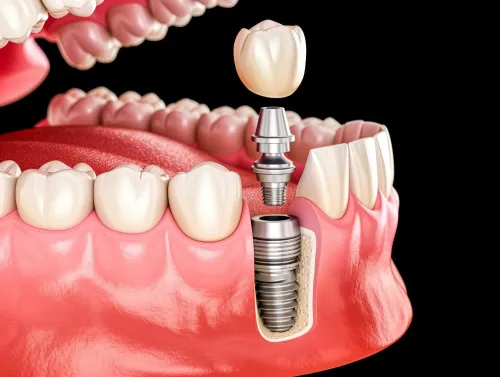
- Replacement offers better control: extraction followed by an implant may suit a hopeless tooth, but active gum disease, uncontrolled diabetes, heavy smoking and other healing risks must be addressed before implant planning.
Even after successful treatment, supportive periodontal care remains necessary. Maintenance visits commonly fall within a 3–12-month range, based on bleeding, pocket depth, plaque control, smoking, diabetes and previous disease activity.
The trade-offs, healing changes, and maintenance commitment
Flap surgery can clean root surfaces and bone defects that remain unreachable through a pocket, but a smaller pocket does not always mean regenerated attachment. Gum shrinkage can create that measurement change, leaving longer-looking teeth, gum recession and root sensitivity, exposed roots, enlarged spaces between teeth, and a higher risk of root-surface decay.
| Option | Main benefit | Main limitation or side effect | Maintenance commitment |
|---|---|---|---|
| Flap surgery | Direct vision and access for thorough root and defect treatment | Surgical discomfort, recession, sensitivity, and healing time | Periodontal maintenance every 3–12 months |
| Scaling and root planing | No incision and less immediate disruption | Cannot predictably reach every deep or complex defect | Careful plaque control and reassessment |
| Laser-assisted periodontal treatment | May reduce instrumentation in selected sites | Does not automatically provide surgical access or rebuild lost attachment | The same continuing periodontal monitoring |
Healing is less predictable if you smoke; address cessation before or alongside surgery. Poorly controlled diabetes can also delay healing and worsen the result, so include glucose control in the treatment plan. Systemic antibiotics are not a routine replacement for surgery or a routine addition to it; use depends on a specific clinical indication.
At Achala Dental Clinic, ask for the proposed pocket-depth change, expected recession risk, tooth-specific prognosis, and exact maintenance interval in writing before consenting. Surgery fails as a long-term solution when daily plaque control and review visits stop, because treated sites can relapse.
Frequently asked questions
What residual findings can justify flap surgery?
A residual probing pocket depth of 6 mm, especially with bleeding on probing, can support considering flap surgery after oral-hygiene instruction and professional subgingival cleaning. Bone loss, deposits that remain inaccessible, and the site’s anatomy also affect the decision.
How does a periodontist decide whether a site is treatable?
The periodontist assesses pocket depths, bleeding, tooth mobility, bone loss, root shape, furcation involvement, cleaning access, and your ability to maintain the area after treatment.
What happens during flap surgery?
The gum is carefully lifted to expose the root and bone, deposits are removed, and the tissue is repositioned and sutured. Ask whether the proposed procedure is access surgery, regenerative surgery, or resective surgery.
When is another treatment safer or more predictable?
Non-surgical periodontal treatment is preferred when deposits can be reached and inflammation is responding. Extraction or another restorative plan may be safer when a tooth has severe structural damage, poor support, an unfavourable root anatomy, or cannot be maintained.
What trade-offs and maintenance does flap surgery involve?
Healing can bring swelling, discomfort, gum shrinkage, exposed root surfaces, and temporary or lasting sensitivity. Long-term success depends on daily plaque control, professional periodontal maintenance, and monitoring of pocket depths and bleeding.